Stand two tiles side by side in a showroom and they can look like cousins. Put them in a lived-in kitchen for five years and the family resemblance ends. Handmade ceramic and porcelain differ in clay, firing, density, and — most usefully — in what they ask of you. Neither wins outright. The right answer depends on which room you are tiling, how hard that room works, and how much character you want underfoot.
What Actually Separates Them
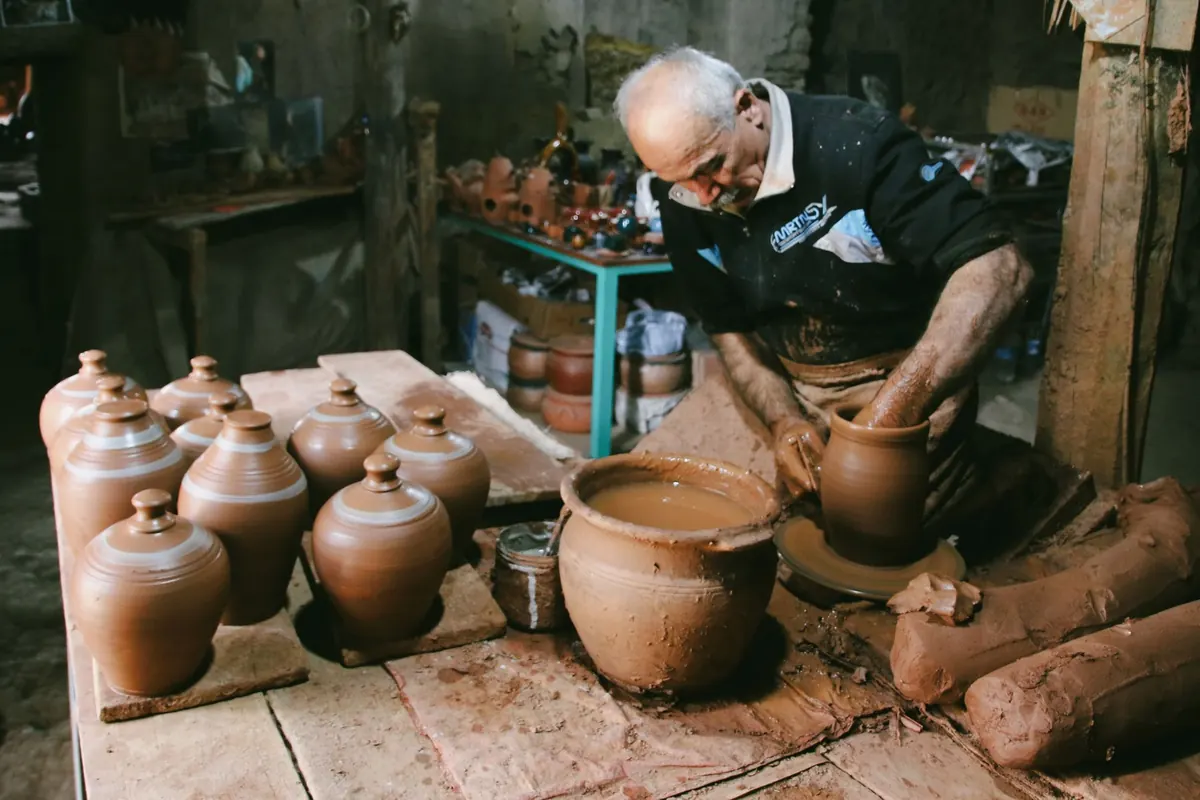
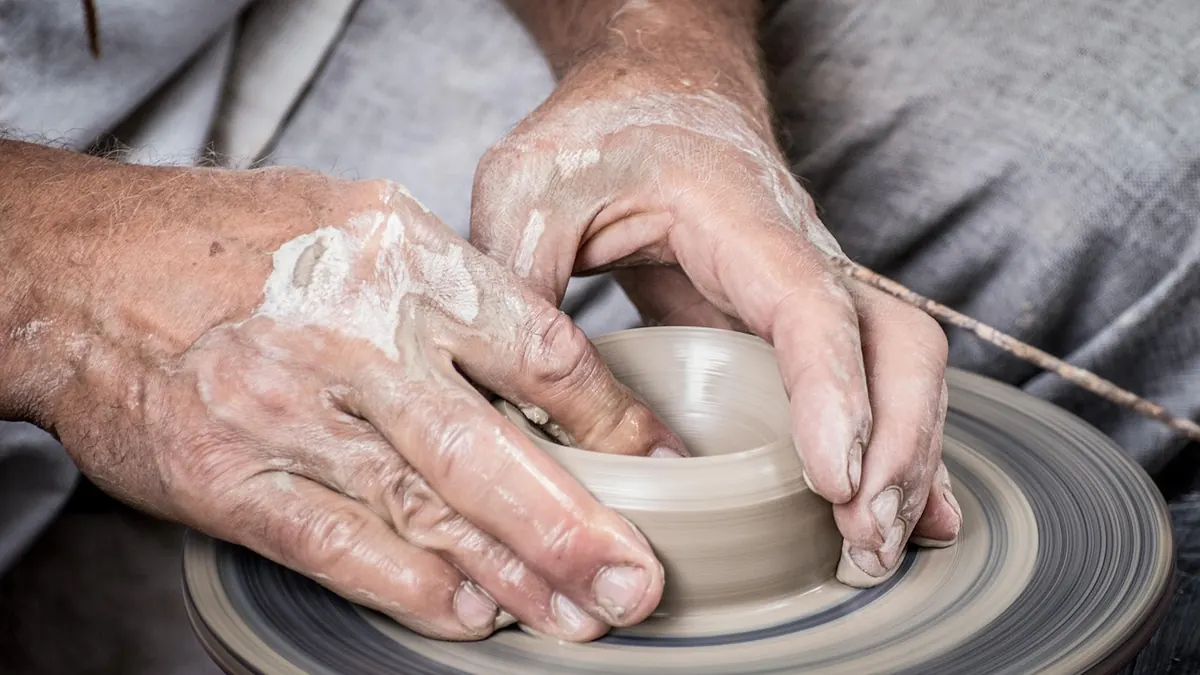
Porcelain is a ceramic, but a dense, refined one. Its body is fired hotter and longer, which closes the material up: a good porcelain tile absorbs less than half a percent of water, which is why it handles frost, splash and standing water so calmly. Handmade ceramic — think maiolica, glazed terracotta, cotto — is fired at lower temperatures from earthier clays. It is softer, more porous beneath the glaze, and every piece carries the fingerprints of its making: slight thickness differences, gently wavy edges, a glaze that pools a little darker in one corner than another.
That variability is not a flaw to be argued away. It is the reason people choose handmade in the first place. It does, however, have three practical consequences you should plan for.
First, porosity. Unglazed cotto and many handmade glazes need sealing, and some need resealing every few years. Second, dimensional tolerance. Handmade tiles are rarely perfectly square or identical in size, so they want wider grout joints — three to five millimetres is common — and a tiler who works with irregularity rather than fighting it. Third, the glaze itself. Fine crazing, that delicate web of cracks in a crackle glaze, is a deliberate finish on many handmade tiles, but it means water can reach the body through the surface unless the tile is properly sealed.
Kitchens: Splash, Grease, and the Occasional Dropped Pan
Behind a hob, handmade ceramic is a lovely choice. A glossy, well-sealed glaze wipes clean, and the slight unevenness of the surface throws light around in a way that flat porcelain never will. Where people get caught out is choosing a heavily textured or pitted glaze directly behind the cooking zone; grease finds those hollows. Keep the rustic texture for the wider wall and use something smoother within easy reach of the pan.
On the floor, porcelain has the clear edge. It resists staining, takes impact from dropped crockery and chair legs, and does not care about the occasional puddle. Glazed handmade tiles will chip at the edges in a busy kitchen, and while a chip in a rustic tile reads as patina, a chip in a rectified porcelain tile reads as damage. If you want handmade underfoot in a kitchen, unglazed cotto with a penetrating sealer is the more honest option — it marks, it darkens, and it looks better for it.
Bathrooms: Moisture Is Patient
Water in a bathroom rarely damages anything the first time. It works slowly, through grout lines and porous bodies, until a tile lifts or a wall behind it softens. This is the room where material choice matters most.
Walls
Handmade glazed ceramic on bathroom walls is well within its comfort zone, provided the tiles are sealed after grouting and the shower area sits behind a proper waterproofing membrane. Tile and grout are a decorative layer, not the waterproofing — that distinction applies to porcelain too. In a steam-heavy shower, check whether the glaze is a crackle finish and seal accordingly; a reputable supplier will tell you what maintenance the finish expects.
Shower floors
Here, porcelain is the safer bet. Choose a matte or lightly textured surface with a slip rating suited to a wet floor, and keep the format small enough — or the joints grippy enough — that water has somewhere to go. Glossy glazed handmade on a shower floor is a slip risk, and sealing it well enough to survive daily soaking is a chore you will not enjoy. Use handmade on the walls and porcelain underfoot if you want both character and grip.
Backsplashes: Where Handmade Earns Its Keep
If there is one place where the argument for handmade ceramic is almost closed, it is the backsplash. It is a small area, seen up close, at eye level, every day. A plain porcelain field tile does its job quietly, but a handmade glaze gives a kitchen a focal point that costs far less than refitting cabinetry. Choose a colour that picks up a tone in the worktop or the cupboard fronts, and keep the rest of the wall calm. Seal the grout, or use an epoxy grout, so the joints stay looking fresh in a room where oil and steam are part of daily life. Order spare tiles — you will want a few for the spot behind the kettle in ten years' time.
Floors: Traffic, Grit, and Point Loads
Porcelain is the practical default for large floors: hallways, open-plan living areas, anywhere with outdoor shoes and furniture being dragged. Its density means stains sit on the surface, and its hard body handles point loads without denting. Large formats mean fewer joints to clean, though they demand a very flat substrate — a floor that would pass for small tiles can fail badly under a metre-long plank.
Handmade ceramic comes into its own on smaller floors: an entrance, a utility room, a boot room, a bathroom. A sealed cotto floor in an entry takes grit and mud and gradually develops a warm, uneven sheen that porcelain cannot imitate. Both materials can work over underfloor heating, but confirm the tile, adhesive and grout are rated for it, and use a flexible adhesive throughout.
Installation and Cost: The Parts That Surprise People
Budget comparisons usually start with the tile price per square metre and stop there. The real figure includes labour, waste and maintenance. Handmade ceramic typically costs more per square metre than entry-level porcelain, and it is slower to install, so the gap widens. Porcelain, especially in large format, can be quicker to lay but needs better substrate preparation and more expensive cutting tools.
- Substrate: both want a flat, stable, properly prepared base. Large-format porcelain is unforgiving; handmade tiles hide small undulations better.
- Tiler skill: ask specifically whether they have laid handmade tiles before. Wide, slightly irregular joints need a steady hand and a consistent eye.
- Cutting and waste: hand-cut edges on handmade tiles can chip; allow a higher waste allowance, often ten percent or more for a pattern-heavy layout.
- Sealing: factor in the cost of sealer and the time to apply it, plus resealing every few years for cotto or crackle glazes.
- Lead times: handmade runs are often made to order and can take weeks. Order your spares in the same batch, because dye lots and glazes shift.
Choosing With Confidence
If you want a floor that will survive children, dogs and a decade of dinner parties with minimum fuss, choose porcelain. If you want a room that looks made rather than specified, choose handmade ceramic where it is seen and touched most — the backsplash, the bathroom wall, the entrance floor — and let porcelain do the heavy lifting elsewhere. Mixing the two is not a compromise. It is usually the most sensible plan in the house.
Photo: igorovsyannykov / Pixabay