A handmade vase rarely arrives perfectly symmetrical. Set it on the table and you may notice the rim dips a fraction on one side, or that the glaze thins to a soft brown at the lip where it ran in the kiln. Those irregularities are usually the reason the piece caught your eye — and they are also the reason buying one rewards a little more thought than picking a mass-produced cylinder off a shelf. The good news is that you only need to answer a handful of practical questions before you spend money, and most of them can be settled in five minutes with a tape measure and a honest look at the corner of the room where the vase will live.
Start With the Neck, Not the Colour
Most first-time buyers fall for a glaze and then discover the opening is too wide to hold a single tulip, or too narrow for the fistful of dahlias they had in mind. Work backwards. The neck decides what the vase can hold, how the stems stand, and how stable the arrangement will be once it is full of water.
A narrow opening, roughly two to four centimetres across, holds a few stems upright with no support at all: a single branch, three tulips, a sprig of eucalyptus. Wide mouths are more forgiving of big bunches but need help — a grid of florist's tape across the rim, a crumpled ball of chicken wire, or a pin holder set in the base. If you already know you will never bother with any of that, buy the narrow neck.
Four forms worth knowing
- Bottle or bud vase. A small base and a long, narrow neck. Ideal for one or two stems and for shelves where space is tight. Check the base is wide enough that a top-heavy stem cannot tip it.
- Cylinder. Straight sides, clean lines, good for tall stems that should stay vertical — gladioli, delphiniums, bare branches. Less good for loose, garden-style bunches, which tend to collapse into a bundle.
- Bulbous or ginger-jar shape. A rounded body with a short neck. This is the workhorse of the house: it holds mass comfortably and looks intentional even when empty.
- Wide-mouthed bowl or urn. Made for low, sprawling arrangements and for floating flowers. Beautiful, but it needs mechanics to keep stems where you put them.
One more consideration: an empty vase spends far more time on display than a full one. If it only looks right with flowers in it, you will end up hiding it in a cupboard between bouquets.
Glazes: What the Surface Is Telling You
A glossy glaze reflects light and wipes clean in seconds; it makes a dark corner less gloomy. A matte or satin glaze absorbs light and looks softer, more like stone, but it shows water marks and fingerprints more readily, so keep a dry cloth nearby. Neither is better — just be honest about how much wiping you will do.
Look closely at the surface for crazing, the fine web of cracks that sometimes develops in a glaze. It is often deliberate and beautiful, and many potters consider it part of the piece. It can, however, let water seep slowly into a porous clay body, so if the vase is destined for fresh flowers, ask the maker whether the interior is glazed and whether the crazing has been seen to weep.
Colour is the hardest thing to judge from a photograph. Screens warm and cool everything, and a glaze that reads grey online may be distinctly green in daylight. Ask for a photo taken near a window, ideally next to something with a known colour — a white sheet of paper, a wooden spoon — or buy in person if you can.
Will It Actually Hold Water?
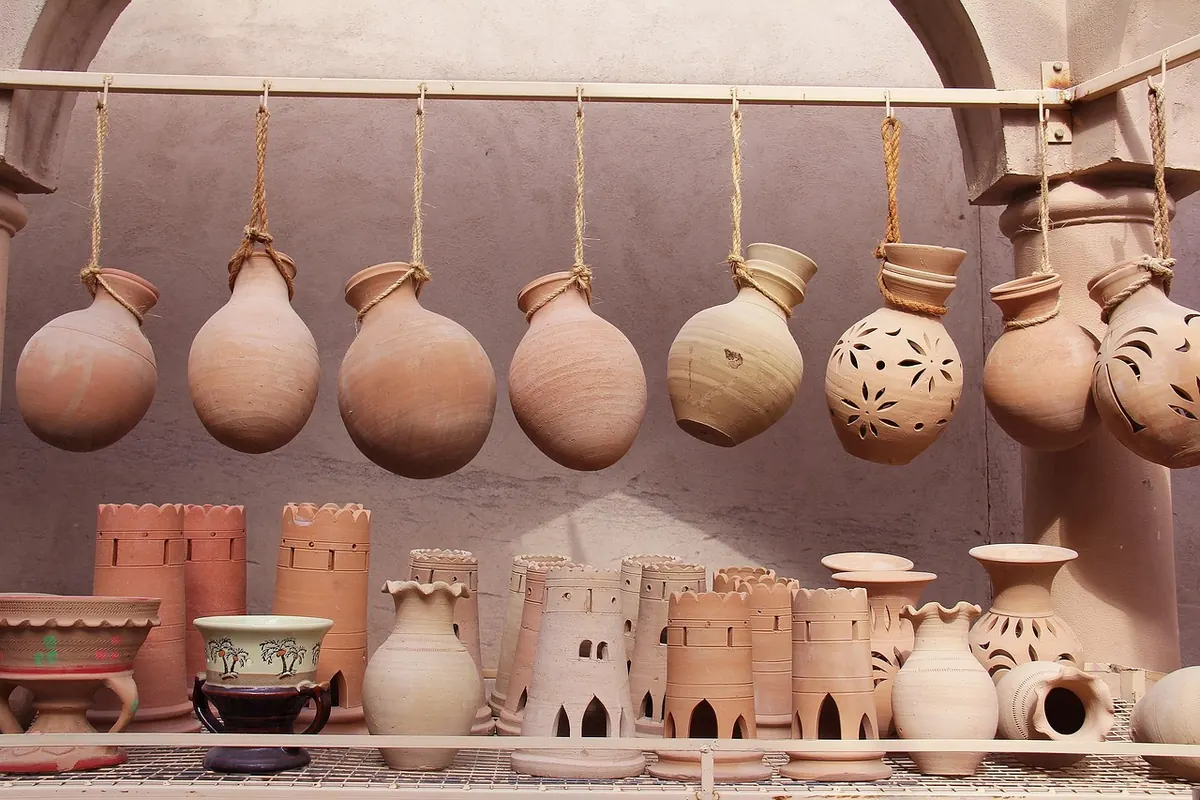
This is the question that separates a vase from a sculpture, and it is not always obvious from the outside. Stoneware and porcelain, fired to high temperatures, are usually dense enough to be watertight. Terracotta and low-fired earthenware are porous: fill one and it will sweat, darken, and leave a damp ring on your oak table within a few hours.
Testing is simple. Fill the vase with water, stand it on a dry paper towel on a non-porous surface, and leave it overnight. In the morning, check for a damp patch or a dark ring under the base. Pay attention to the foot, too: an unglazed base wicks moisture even when the walls are sealed.
If a vase turns out to be porous, you have options. Use it for dried stems. Slot a glass or plastic florist's tube inside the neck for a small posy. Or ask the maker about sealing the interior — worth doing only with their guidance, since some sealants are difficult to remove and can change the surface for good. And check the base width against the height: a tall, narrow vase filled with water and heavy flowers becomes top-heavy on a table that gets knocked.
Proportion and the Empty-Vase Test
Scale is where most first purchases go wrong, usually in the direction of too small. A vase that looks generous in a shop window can look apologetic on a wide sideboard. Before buying, measure the surface it will sit on, then cut a piece of cardboard to the vase's height and width and stand it there for a day. You will see immediately whether it holds the space.
A few working habits help. On a dining table, keep the finished arrangement low enough that guests can see across it. On a shelf, let the vase and its flowers occupy roughly the upper half of the space between shelf and ceiling — anything taller starts to feel cramped. For a floor vase, pair it with a piece of furniture so it reads as part of a group rather than a lonely object. As a rough guide for a single stem, a vase around one and a half times the length of the stem usually looks balanced; for a full bunch, the flowers should be about as tall again as the vase.
Placement: Light, Surface and What Sits Behind It
Where the vase will live should influence what you buy. A pale, matte glaze glows on a sunny windowsill; a dark, glossy one disappears into a dim corner unless it has a light wall behind it. If the vase will stand in front of a busy patterned wallpaper or a crowded bookshelf, a simple silhouette will read better than an elaborate one.
Think about traffic, too. A narrow-based vase on a hall table beside a doorway is an accident waiting to happen. And because water and wood are not friends, put a felt pad or a coaster under any vase that will sit on furniture for long periods, especially if the base is unglazed.
Questions Worth Asking the Maker
At a market or in a studio, a few direct questions will tell you more than any label: What clay is this, and how hot was it fired? Is the inside glazed? Is it watertight, and has it been tested? Can it go in the dishwasher, or should it be hand-washed? Turn the piece upside down as well — a flat foot ring that sits without rocking matters more than you would think once the vase is full.
Before You Pay: A Short Checklist
- Measure the shelf, table or floor space, and the height available above it.
- Decide what will go in it — a single stem, a tight bunch, or branches — and check the neck suits that.
- Ask whether it is watertight, and test it overnight if you can.
- Turn it over: does it sit flat, and is the base glazed?
- Hold it at arm's length in daylight rather than under shop lights.
- Picture it empty, in the exact spot you have chosen.
Buy one good vase rather than three adequate ones, and let it be slightly larger and slightly stranger than you first intended. The piece that makes you pause in the shop is usually the one you will still be filling with branches in ten years' time.
Photo: sharonang / Pixabay